As part of our research for Large size practices and projects we had a presentation followed by a practice visit:
1.John McAslan & Partners, Presentation by Giuseppe Messina
2.Haverstock Associates practice visit
John McAslan & Partners
Presentation by Giuseppe Messina
We were introduced to, what I didn’t know at the time, one of the leading British architectural firm, working globally on highly influential projects. Giuseppe Messine described the practice as medium size, with around 80 employees in the London office, also with offices in Manchester and Edinburgh.

John McAslan founded this practice with his partner Richard Rogers. They have been operation since 1994. Himself from Dunoon, Argyll, a small town in Scotland, was influenced by American modernism. On the first chance, he visited America and travelled around studying buildings such as the Falling Water. This very much shaped his way of designing for a very long time.
The practices first commission was the conversion of a 1950s car showroom in Camden Town into the Design House. Other earl days designs were characterised by sharply clarified details and graphic effects. By today the practice has developed so much into our modern times. Co-direstor Aidan Potter quotes:
“Sometimes, the serial decision produces a serial conclusion –the premature diagram that is part of modernism’s failure in urbanism, landscape and housing. Every town and city is littered with failed, if well intentioned, experiments. It can’t be the right thing to pretend it hasn’t happened. We need to rebalance it. Architecture determines space, but people make spaces positive, make them take on a personality. Completely resolved, completely ordered buildings and spaces are completely vacant. They induce a loss of identity.”
John McAslan and Partners, for short JMP’s design teams have strong foundations in traditions of an earlier age, when architects have more typically produced clearly assembled civic and industrial locales. And this is one reason why, apart from an impressive portfolio of new buildings and urban masterplans in Britain, Russia, India, Qatar and Africa (roughly 100 projects at any one time, half of them “live”) the practice has become pre-eminent in Britain as modernisers or recasters of important seams of historic architecture.
The practice is broken into sectors of different types of architecture. The four major units within the practice are Buildings, Interiors, Masterplans and Landscapes. Listed below is the sectors with examples of projects for each:
- Commercial_5 Cheapside London; Mandarin Oriental Hotel Quatar; British Embassy Algiers
- Residential_Royal Military Academy London; St John’s Wood Barrack; Palazzo Rossi Russia
- Education_University of Manchester nursing school, student centre and University Place; Royal Society of Arts, Kingston University, Lancaster University Engineering Building
- Art & Culture_Mosque Msheireb Quatar; Roundhouse London; London’s Royal Academy of Music; De La Warr Pavilion Bexhill; Volubilis Morocco
- Transport_King’s Cross Station Masterplan London; Bond Street Station London; Dalston Junction Station London; Crystal Palace Station London; metro stations in Delhi India
- Urban Design & Landscape_Oxford Road Corridor Manchester; transport and public space scheme on Oxford Street London
Projects by JMP
King’s Cross Station Masterplan
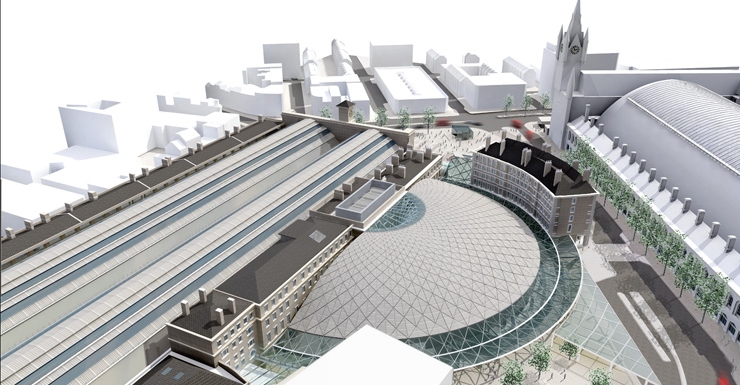
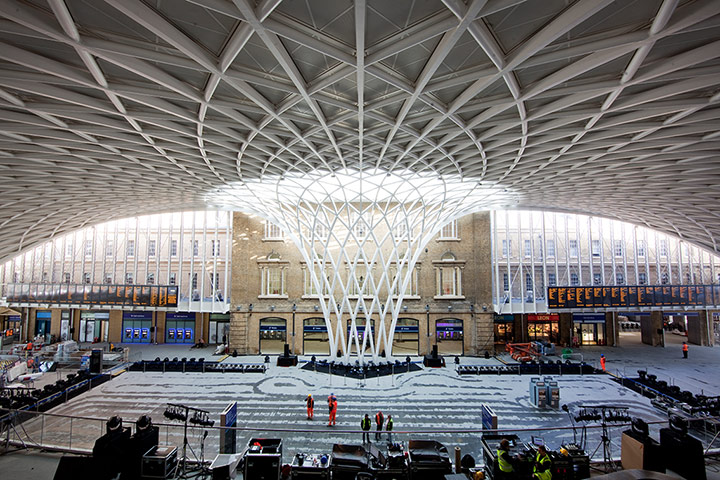
The regeneration of King’s Cross is a city planning initiative at an incredible ambitious scale, being described the largest urban regeneration project in Europe at the time. King’s Cross is a gate between Europe and London, housing the Eurostar just 2 minutes walk away in St Pancras station. It’s a very important transport link for the Transport for London as well as people travelling around the country or travelling out of the country. While thinking of the redevelopment, the practice had to explore and keep a few things a priority. The station had to be flexible, the movement and experience of people was the main focus. Users had to get around easily, within King’s Cross and St Pancras, as well as getting around the surrounding areas. The building housing the station was opened in 1852 and today is a Grade I listed building, so not much of the original structure could be changed. They have faced planning constraints and structural barriers. Instead of trying to change is, the practice designed a plan that not only emphasise the beauty of the original building but in addition build a modern masterpiece around it. The new roof structure for the Western Concourse was not to place any load on the Range building so engineers Arup was forced to seek an alternative approach. Arup suggested a diagrid system supported by an immense funnel and sixteen columns, each of which supports a 1.5 metric tonnes of castings. This creates a 7,500sq m public space. Network Rail brought in John McAslan and Partners in the late 1990s, after Fosters and Partners begin work on the groundbreaking scheme in the 1980s. After studying the use of the station, the practice wanted to restore the original way of movement and form a consistent pedestrian flow throughout the transport hub. This was incredibly important as the London 2012 Olympics were approaching and the practice was delighted to finish the project just in time before the Games.

Crossrail Bond Street Station
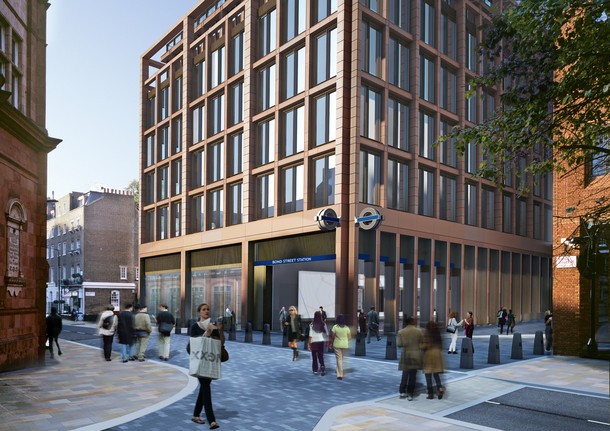
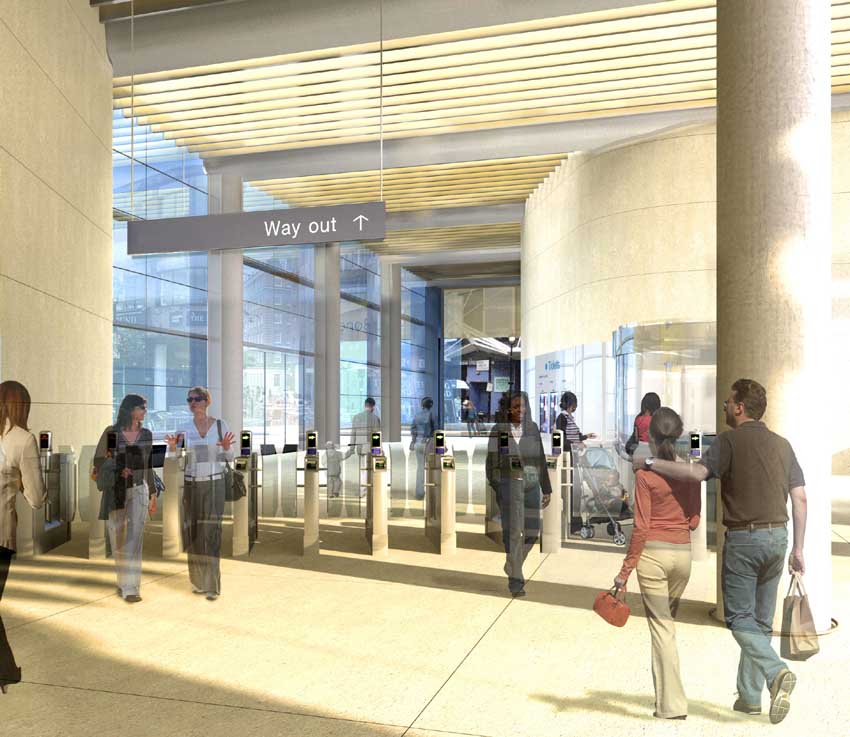
Mr Messina’s presentation was mostly focused on the most current project the practice is working on. The new Bond Street station is £300million project. The work will involve constructing two ticket halls, carrying out excavation of the two platform tunnels (eastbound and westbound), the interconnecting lifts and escalator shafts, fitting out the station, facilitating construction of ‘over-site’ developments and eventually testing and commissioning the complete railway. The cost is spread out for example 12% goes to the architects, 16% to tunnelling which is the biggest part of the project. The practice won the scheme in 2009. The client is Crossrail as well as the public who will be the main users of the final ‘product’. In January 2010 the existing building was demolished, starting out the building process. The due date for the finish is 2017. They wanted to build a building which will be content for 500 years. It’s a very long time to consider regarding materials and usability, sustainability as our times change so rapidly and we all can only assume what the future will bring. The project comprises the creation of two deep east-west platforms which emerge at street level via two new ticket halls south of Oxford Street with connection to the existing underground station. The interchange will serve 230,000 people daily. They have carried out an Urban Integration Study which in a whole will ensure that the new station will work effectively and provides with a platform for a positive experience. There was plenty to work on even before they considered the design which would effect the public the most. The station had to work effectively, which included the platforms and tracks being laid down, ventilation system to be installed along the 25 m length of the platform ensuring simply that people can breath underground. Above this they designed tunnels and a ticket hall which had to work well for the quantity of the people and their use of each space. They considered where people would have to make decisions, oppose to where it can be a fast flowing traffic. Above all this was the development on ground floor and above a six storey scheme. The land above the ground was up for sale, half of the plot sold to a new client, who wanted to build commercial and office spaces. This new client had their own ideas and plans very separate to the station and they have brought in their own architects. Now McAslan’s architects had to collaborate with the other architects to create a whole and complete project. In total 110 people is working on the scheme including the 18 architects.
The work process after the demolition of the building 354-358 Oxford Street, archaeologists have carried out excavation at the western site, as it lies over the historic line of Tyburn River, which could have affacted the foundation soil. Luckily it didn’t come in the way of anything. The excavation have retrieved artefacts such as clay pipe, pottery and bricks, dating back to the early 17th century from the soil. Major works were completed in early 2012 to replace the extensive and worn out utilities. On five locations, additional work was needed to be done to construct underground shafts for the lifts. At this current moment, the project is at the stage of constructing the top down space which involves the sequential construction and excavation of the internal floors within the box structure of the ticket halls.
John McAslan and Partners written by Zsofia
Haverstock Accossiates
Haverstock associates deal primarily with public sector projects such as schools, train and police stations and residential projects. They take pride in high quality, functional buildings whilst looking for sustainable solutions throughout the process of construction and during the lifetime of the building. The practice was founded in 1980 and now employs 21 architects and architectural assistants.


 Zsofia Tompa